
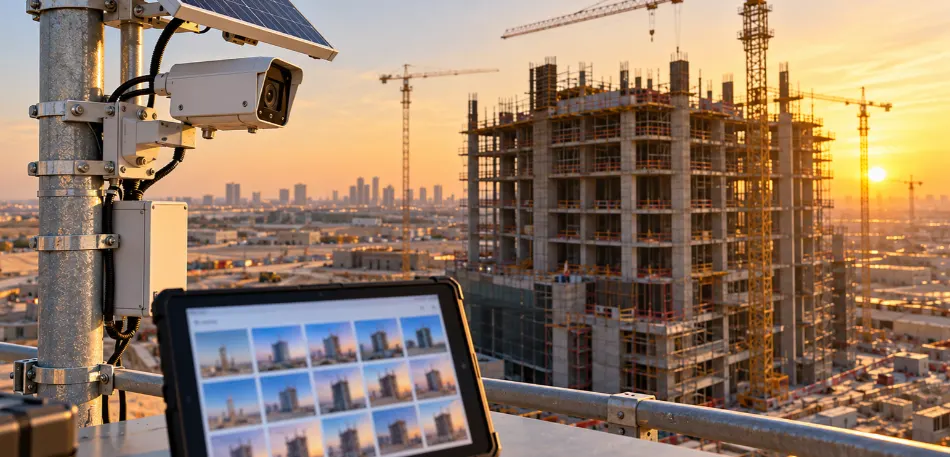
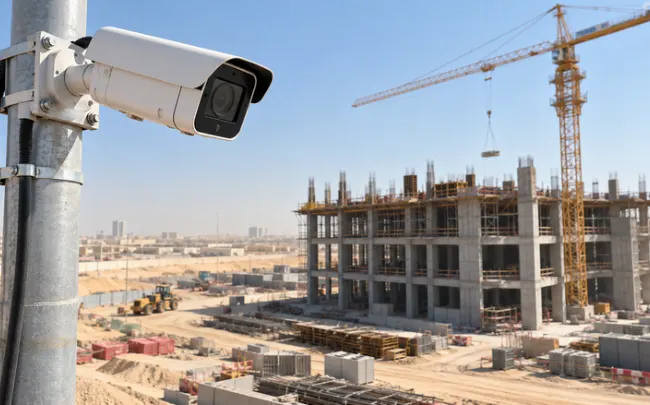
A camera bolted to a pole on an open site meets sun, dust, rain, and wind every day, and its footage may end up in a dispute file months later. Shoppers searching for a weatherproof security camera often need something slightly different: a camera built to record progress, not only to watch for intruders. This guide explains how each type works, what the specs mean, and how to judge a unit against real site conditions.
How a Weatherproof Security Camera Differs From Timelapse Cameras
A security camera is built for live watching and short-term recording. Many CCTV systems overwrite older footage after about a month, and files are often compressed to save disk space. Timelapse cameras do another job. They shoot stills at set intervals and stitch them into a video that shows a site changing over weeks or months.
A laser scan is a third tool. It captures one exact, millimeter-level snapshot, while a timelapse records change over time, much like paging through dated photographs. Plenty of sites run more than one of these together.
How the Capture Process Works
The process runs in four steps. First, the camera takes a still at a fixed interval. Second, a built-in WiFi or SIM-based link, such as 4G or LTE, sends each image to cloud storage, so nobody collects memory cards by hand.
Third, the platform dates and sorts every frame. Fourth, the images assemble into a progress video, and a custom cut can be made for a chosen date range, speed, or quality. That dated sequence is what gives the footage its value as evidence later.
Reading a Spec Sheet
Resolution
Between 5 and 12 MP covers most progress records. Go above 12 MP if the photos might support a dispute or claim, since extra pixels allow zooming in later. Cameras on the market run from 4 MP stills units to 45 MP DSLR box models, and some suppliers can source up to 100 MP.
Weather, Heat, and Power
Look for IP66 or higher on either a weatherproof security camera or a timelapse unit, so rain and dust stay out.
Heat gets overlooked. Many cameras are rated to only 49 to 55°C, while summer air in Saudi Arabia and the UAE often reaches the mid-40s°C, and a camera in direct sun runs hotter than the air around it. Ask for the highest heat rating available, and read the datasheet itself rather than a sales summary.
For power, solar with a battery suits sites without steady mains. Mains work once the site electrics are in.
Placement and Mounts
Mount the camera high and outside the work area, with the sun behind it, and frame the full height of the finished building from day one. A wind-rated mount matters too. If a storm nudges the camera, the angle shifts, and later frames stop matching earlier ones.
Low light deserves a question as well. Ask how a camera behaves at 4pm in December, not only at noon in summer.
What a Dashboard Does With the Pictures
Live view shows the site now. Image comparison sets two dates side by side in a slider or split view. AI detection can tag vehicles and people and flag missing hard hats, and reports can be scheduled weekly, biweekly or monthly as PDFs.
Treat AI flags as a screening aid. A person should confirm anything that affects safety or a contract.
Regional Selection Notes
Saudi Arabia
Anyone hunting for the best timelapse camera Saudi Arabia projects can rely on should start with scale. Giga-projects such as NEOM, Qiddiya, and the Red Sea Project involve many contractors, investors, and ministries, so one shared dated record keeps everyone on the same facts.
Remote sites may lack grid power, which favors a solar unit. 360° monitoring from several control points can cover a footprint too large for one camera.
United Kingdom
For the best cameras for timelapse in UK work, rain, wind, and short winter days shape the choice. Look for weatherproof housing and a wind-rated mount. Heritage and retrofit jobs may need interior monitoring, which gives a room-by-room record of the kind conservation officers ask for.
Many planning conditions request proof of progress, though a camera is not always required, so read the conditions at your own permission.
Final Thoughts
Start with purpose: live watching, progress evidence, or both. Then check resolution, IP and heat ratings, power, connectivity, and mounting against the datasheet and your own site conditions. Rawadh publishes further technical detail for readers comparing timelapse options. Which item on your checklist is still unanswered?
FAQ
Is a timelapse camera the same as a CCTV camera?
Nope. CCTV is mostly for security and live watching. A timelapse camera records progress over time with dated pictures that are sorted and easy to share. Lots of sites run both because the jobs are different.
How many megapixels do I actually need?
For most progress records, 5 to 12 MP does the job. If the photos might back up a dispute or claim, go higher, because extra pixels let you zoom in later without the image falling apart.
What does IP66 mean on a camera?
Think of it as a basic shield rating. IP66 or higher means rain and dust stay out of the housing. Check it on the datasheet, then check the heat rating too, since many cameras only handle 49 to 55°C.
Can I use a camera where there is no mains power?
Yes. A solar unit with a battery is built for off-grid sites, which is common on remote gigaprojects. Once the site electrics go in, mains power becomes an option as well.
How do I find footage from one specific week?
Open the dashboard and jump to the date range or milestone you want. Because every frame is dated and sorted, you skip scrolling through thousands of pictures.

Leave A Comment