

Best Time-Lapse Camera
for Saudi Arabia
Time-lapse monitoring has become close to essential on Saudi construction sites, not an add-on but part of how progress gets proven on projects too large and too high-stakes to track by memory or a weekly site visit. With NEOM, Qiddiya, and the Red Sea Project running at a scale measured in decades and billions of riyals, a camera and a dashboard have become the standard way project leadership, investors, and government stakeholders actually see what's happening on the ground, without needing to be there.
Why Time-Lapse Matters So Much Here
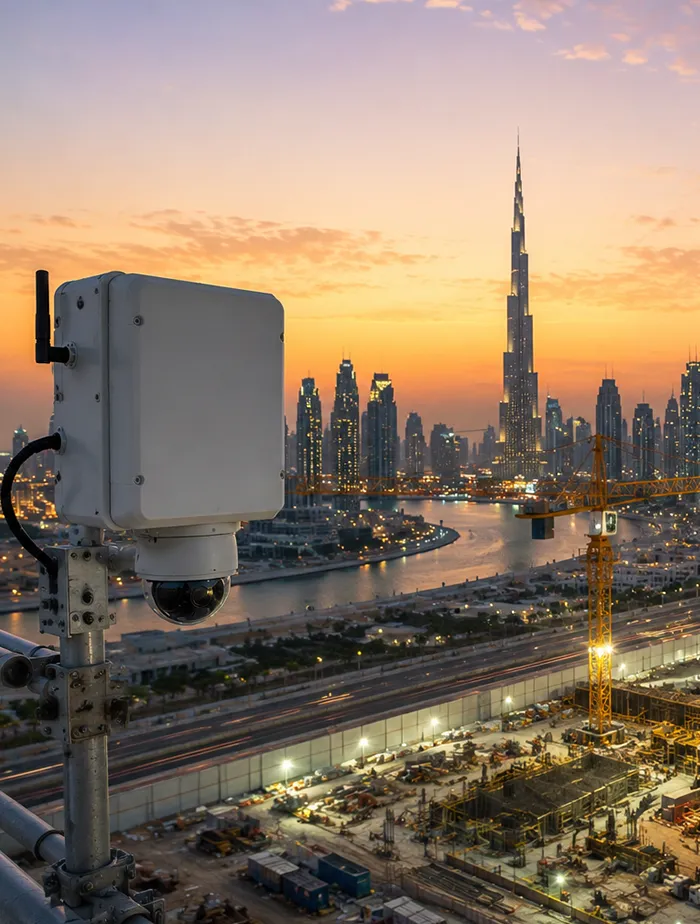
Vision 2030 has turned Saudi Arabia into one of the most closely watched construction markets in the world, and that scrutiny runs in both directions. Investors and ministries want proof of progress they can point to, and contractors want a record that protects them if a delay or dispute ever gets questioned. On a project spanning kilometers with a dozen contractors working different zones at once, nobody senior is walking the whole site daily to check on it themselves. A time-lapse feed and dashboard have effectively replaced that daily walk, giving everyone from a site manager to an international investor the same dated, visual answer to “where are we right now.”
What It's Actually Used For
- Investor and stakeholder reporting: Giga-projects answer to boards, ministries, and international partners who need dated visual proof, not a status meeting.
- Multi-contractor coordination: When five or six contractors are working different zones of the same megaproject, one shared visual record keeps everyone looking at the same reality.
- Dispute and delay documentation: On projects this size and this long, disagreements over what happened and when are common, dated footage settles them fast.
- Remote site oversight: Many giga-project sites sit hours from the nearest city; a camera and dashboard mean project leadership doesn't need to be physically present to know what's happening.
Our Recommendation
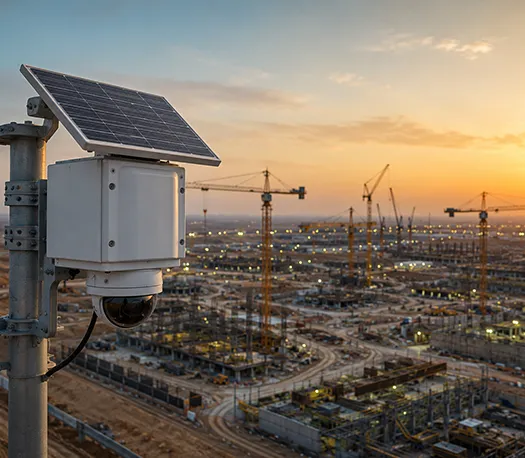
For gigaproject scale, 360° construction monitoring from multiple control points gives coverage across a footprint too large for any single camera. For sites without grid power nearby, which is common on projects like NEOM, the solar time-lapse camera runs entirely off-grid without relying on infrastructure that may not exist yet at that stage of the build.
FAQ
Why do gigaprojects specifically need this more than a standard construction site?
Scale and stakeholder count. When a project involves multiple contractors, government oversight, and international investors, everyone needs the same visual reference point, not five different accounts of progress.
Can this cover a site too large to walk in a day?
Yes. Multiple cameras feed into one dashboard, so a site spanning kilometres is still one unified view.
Do you provide reporting suitable for investor or board updates?
Yes, scheduled PDF reports are built for exactly that kind of audience.
Where in Saudi Arabia do you operate?
Riyadh-based, covering sites across the Kingdom, including NEOM and Qiddiya.
- Al Haram Project
- Mall of Saudi Project
- Saudi Railway
- NEOM Office Project
- Qiddiya Road Project