

Best Timelapse Camera
for Saudi Arabia
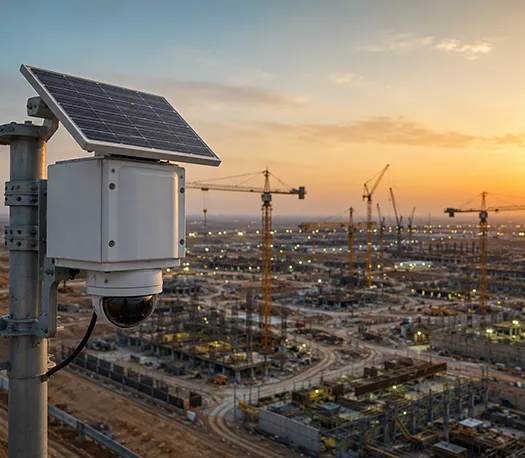
Choosing the best timelapse camera Saudi Arabia projects can depend on starts with one plain question: will it still be recording in month eight? Saudi sites run through fierce summers, drifting dust, and long stretches far from the nearest city. A timelapse camera that struggles with any of that leaves gaps in your record, and gaps are the first thing people question later. Rawadh supplies desert-ready construction site monitoring from our Riyadh office, whether your site is a tower in the city or open ground near NEOM. This page explains what to look for in a camera and how each feature works on a real Saudi site.
Why Saudi Arabia Needs a Desert-Ready Timelapse Camera
A timelapse camera does one job: it takes a picture of your site, again and again, for months or years. That sounds easy until you place it in the Saudi climate.
Summer heat can push ordinary electronics past what they were built for. Dust settles on lenses and works its way into poorly sealed housings. Sandy winds shake mounts and can nudge the camera off its angle. Many sites also sit hours from a city, with no mains power at the start and a weak signal for months afterwards.
Then there’s the working pattern. On many Saudi projects, heavy work moves into the cooler hours, so a camera that only sees well in daylight misses part of the story.
Put these together and the question changes. It’s no longer “which camera takes the sharpest photo?” It becomes “which camera keeps taking photos, day after day, in these conditions?” That’s the question we help clients answer.
What Makes the Best Timelapse Camera Saudi Arabia Sites Can Rely On
Here are the features that matter most for a Saudi site. We’ve kept the list short on purpose, because these are the ones that decide whether your record stays complete.

Weatherproof and dustproof build
The best timelapse camera Saudi Arabia projects need is one made for desert conditions, with a sealed body that keeps dust and heat from shortening its life. Ask any supplier what protection rating their housing has.

High-resolution imaging
4K Ultra HD and 6K options capture enough detail to zoom in months later and check a joint, a pour, or a delivery.

Night vision
Infrared technology keeps the camera recording after dark, so night shifts and after-hours activity don’t vanish from your record.
Panoramic view
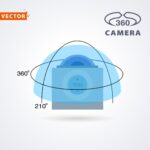
A 220° wide-angle view covers more of the site from a single mounting point, which means fewer blind spots and fewer cameras.

WiFi and 4G LTE connectivity
- Photos reach your dashboard even where there’s no site network. A SIM-based connection handles remote locations.
Solar-powered cameras
These cameras run on their own solar-charged supply, so there is no cable to pull and no need for grid power. They suit remote locations, early-stage sites and projects still weeks away from mains electricity.
- your site is far from existing power
- the camera has to go up before the electrical works begin
- you’d rather not depend on temporary site power
Electric-powered cameras
These come with a built-in connector for mains power. They suit city sites and established projects where stable electricity is already on hand.
- your site already has reliable mains supply
- the camera will stay in one fixed spot for the whole build
- you want the simplest possible setup
Solar or Electric: How to Power Your Timelapse Camera
See Your Site from Anywhere in the Kingdom
A good timelapse camera is only half the system. The other half is how easily people can see what it captures.
Every Rawadh camera feeds a secured web portal, customised for your project. You can open it on your phone or your computer at any hour, so checking the site doesn’t depend on a flight, a long drive, or a phone call to the foreman.
When others need to look in, live streaming can be made available to your stakeholders. A consultant in Jeddah, a client in Riyadh, and a project director abroad can all view the same site at the same time, without sharing passwords or forwarding files.
Smart Alerts and Privacy on Site
-
AI motion detection
sends automatic alerts for safety concerns, such as movement in an area that should be quiet, including outside working hours.
-
AI editing
applies filters and builds videos for you, so a progress clip doesn’t need an editor.
-
A privacy option
lets you blur people in the footage. This helps when images are shared widely and you’d rather not show workers’ faces.
Keeping Remote Sites Protected
Remote sites often have few people around once the working day ends. That makes them easy targets for theft, vandalism, and unauthorised entry.
A timelapse camera adds a quiet layer of protection. Its footage gives you a dated record if something goes missing, and its alerts tell you when something looks wrong. It doesn’t replace a guard or a CCTV system, but it fills a gap between visits that many sites don’t realise they have.
FAQ
Can a timelapse camera handle Saudi summer heat and sandstorms?
Yes, if it’s built for it. Our cameras are weatherproof and dustproof, made for desert conditions. Whichever supplier you choose, ask for the working temperature range and housing protection rating in writing.
Does a timelapse camera still record at night on a Saudi site?
Yes. Our cameras use infrared night vision, so activity after dark is recorded too. That matters on sites where work shifts to cooler hours.
How does a camera send photos from a remote site with no Wi-Fi?
Through 4G LTE. The camera uses a SIM-based connection to send its pictures to your dashboard, so it doesn’t need any site network. WiFi is also available where a network exists.
How do I choose between a solar and an electric-powered timelapse camera?
Look at your power situation. If mains electricity isn’t available yet or is unreliable, solar is the safer choice. If your site already has stable power, an electric camera with a built-in connector is simple and dependable.
Can the camera blur workers’ faces for privacy?
Yes. A privacy option blurs people in the footage, which is useful when you share images with a wide audience.
Will I get an alert if someone enters the site after hours?
Our AI motion detection sends automatic alerts when it spots activity that needs attention. It’s designed for safety monitoring, so it works alongside, not in place of, your site security.
Can dated timelapse footage settle delay disputes between contractors?
Yes. On long projects with many contractors, people often disagree about what happened and when. Dated footage gives everyone the same record to check, which settles most questions quickly and protects contractors if a delay is questioned.
Can stakeholders watch the site live without internal system access?
Yes. Live streaming can be made available to your stakeholders through the secured web portal, so they can watch without needing access to your internal systems.
How wide is the view of one panoramic camera?
Our panoramic option covers 220° of wide-angle view from a single mounting point. For very large sites, we can add more cameras to cover additional zones.
- Al Haram Project
- Mall of Saudi Project
- Saudi Railway
- NEOM Office Project
- Qiddiya Road Project