

Camera Timelapse
in Germany
Time-lapse monitoring fits naturally into German construction culture, which already runs on a level of process documentation that other markets treat as optional. A camera timelapse setup on a German site isn't an unusual addition; it's simply another form of the documentation German planning, quality assurance, and regulatory processes already expect from a project.
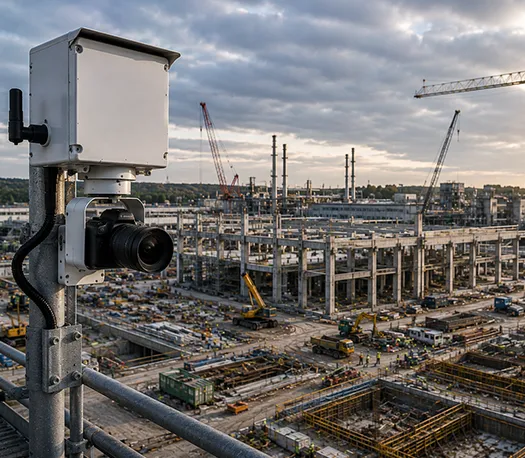
Why Time-Lapse Matters So Much Here
Germany’s planning and permitting process, Bauamt approval, and strict building codes are thorough and documentation-heavy from the outset, and that expectation continues through construction itself. Quality assurance and process transparency matter as much as the finished result, particularly on industrial and manufacturing builds where a defined, auditable process is often written into the contract. Layer in GDPR, which means any digital monitoring system has to handle data properly as a genuine requirement, not an afterthought, and time-lapse monitoring becomes less of a convenience and more of an extension of standards German construction already holds itself to.
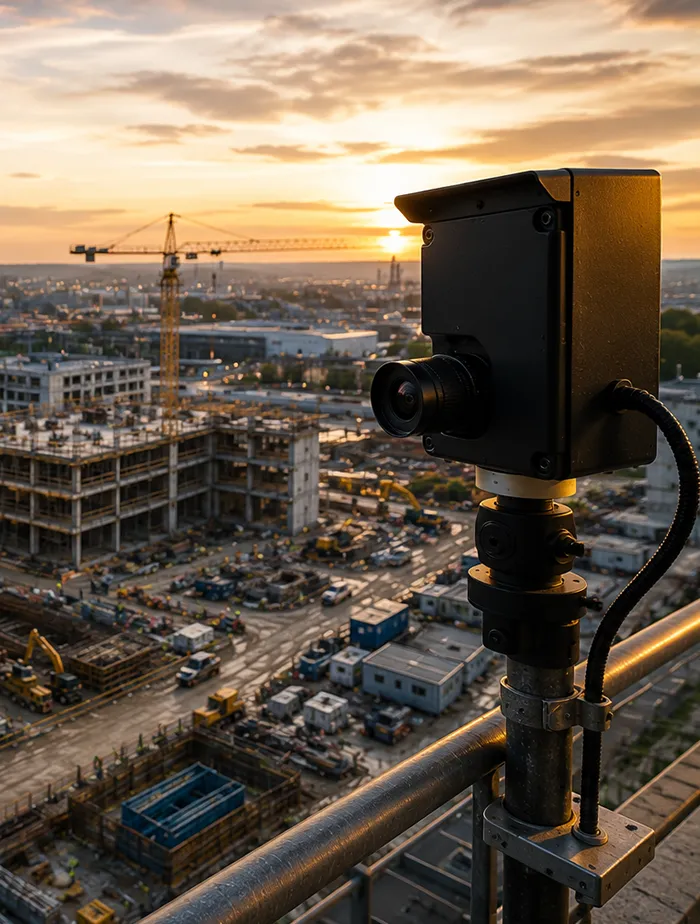
What It's Actually Used For
- Permitting and regulatory documentation. Progress records that support the documentation German planning and building authorities expect throughout a project, not just at completion.
- Quality assurance records. Industrial and manufacturing builds often need an auditable process trail; timelapse footage provides exactly that, automatically.
- Works council and stakeholder transparency. Internal stakeholders, including works councils on larger industrial projects, get a clear, unedited record of how work actually proceeded.
- GDPR-compliant data handling. Any monitoring system touching a German site needs to satisfy data protection requirements, which is built into how footage is stored and handled.
Our Recommendation
For most German sites, the 24MP or 45MP DSLR box time-lapse camera on mains power gives reliable, high-quality documentation suited to the process-heavy standards common on German projects. For industrial or manufacturing builds needing full-site oversight, 360° Construction Monitoring adds coverage across multiple zones of a larger facility build.
FAQ
Does this help satisfy German permitting or regulatory documentation requirements?
It can support that kind of documentation, yes, though specific requirements vary by project and municipality; we can discuss what your project needs upfront.
Where is the data stored, and does it meet GDPR?
Yes. Rawadh stores your timelapse footage on GDPR-compliant infrastructure, and we can share documentation if your project needs it.
Is this suited to industrial or manufacturing construction, not just commercial building?
Yes, it's commonly used on industrial builds needing an auditable process record.
Do you operate directly in Germany or remotely from another office?
The service runs directly through our Germany operations, with the same setup and reporting standards as our other regions.
- Al Haram Project
- Mall of Saudi Project
- Saudi Railway
- NEOM Office Project
- Qiddiya Road Project