

A CCTV construction site setup usually starts the same way. A contractor bolts a few dome cameras to a hoarding, points them at the gate and the crane, and calls it security. That covers theft and access. It does almost nothing for progress documentation, and on a build that runs for eighteen months, progress documentation is often the harder problem to solve.
The confusion is understandable. Both systems use a camera. Both feed a screen somewhere. But the job they are built to do is different enough that mixing them up costs contractors real time when a dispute lands or a client asks for proof of where things stood in March.
Is Construction Monitoring a Different Job Than Site Security?
Standard CCTV is designed around a narrow question: Is someone where they shouldn’t be right now? Footage loops. Storage is usually local, tied to a hard disk that overwrites itself every thirty days unless someone manually pulls a clip before it cycles out. That works fine for catching a fence-jumper. It falls apart the moment someone needs to see what the foundation looked like four months ago.
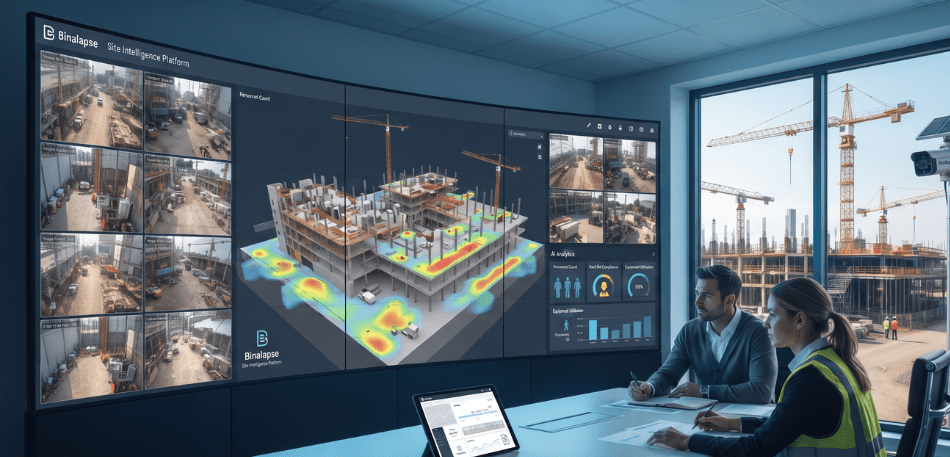
Construction monitoring asks a different question: what changed and when. A timelapse camera answers that by shooting still images at set intervals, then assembling them into a continuous video that runs from groundbreak to handover. Rawadh’s platform, Binalapse, does this with solar or mains-powered DSLR units feeding one dashboard, with AI reading the footage so nobody has to sit and scrub through hours of raw video by hand. That single distinction, security versus documentation, is why the two systems keep getting compared and keep confusing people who only need one of them
Storage and Retrieval Change Everything About a Dispute
This is where the gap actually shows up on a live project. Standard CCTV storage is typically capped, and once the drive fills, older footage gets overwritten. If nobody flagged a specific date in advance, that footage is gone. Binalapse takes a different approach: unlimited storage with instant backup to dual servers, so any point in the project’s history can be pulled up in seconds rather than hoped for.
Construction disputes over delays, defects, or variations frequently come down to who can produce dated evidence of site conditions on a specific day. Industry guidance on conflict avoidance in construction repeatedly flags record keeping as one of the clearest ways to prevent disagreements from escalating into formal claims. A camera system that quietly deletes its own evidence every month is not built for that reality. A system with permanent, searchable records is.
Hardware Footprint: One Camera Instead of Six
A standard CCTV setup covering a mid-size site typically needs four to six cameras to get adequate coverage, each requiring cabling, a LAN connection, and ongoing configuration. A timelapse system built for construction monitoring, by contrast, usually needs one or two units per site, connects over built-in WiFi or SIM-based data, and runs plug-and-play from day one. For contractors managing several active sites at once, that difference in hardware and setup time compounds fast.
AI Detection Adds a Layer CCTV Never Had
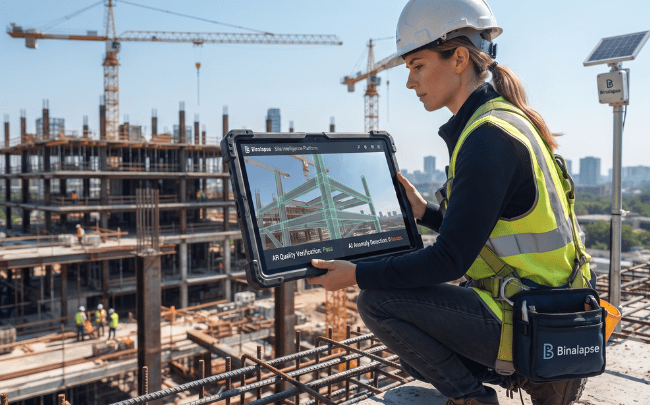
Basic CCTV records. It does not interpret. A construction-grade timelapse platform adds AI detection on top of the footage: vehicles and personnel tracked automatically, hard-hat compliance flagged without a human reviewing every frame, and activity cross-referenced against historical weather data for the same dates. That turns raw video into something closer to a searchable log of site activity, which matters when a project manager needs a report rather than eight hours of footage to sit through.
Reporting Is Built In, Not Bolted On
Standard CCTV was never designed to produce a report. Anyone who wants a progress summary from a CCTV feed is stitching it together manually, usually the night before a client meeting. A construction monitoring platform generates scheduled or on-demand PDF reports directly from the camera data, ready to hand to a client, consultant, or lender without extra formatting. On a project already running on a full site management workload, that saved time adds up across the life of the build.
Sites Already Running CCTV Don't Need to Start Over
One detail contractors often miss: existing CCTV hardware doesn’t need to be ripped out to add timelapse and reporting capability. Binalapse integrates with almost any existing IP camera, layering time-lapse video, AI detection, and reporting on top of infrastructure that’s already installed. The choice isn’t always CCTV or timelapse. Often it’s CCTV plus timelapse, running through one dashboard instead of two separate systems.
Final Thoughts on Timelapse Camera vs CCTV Construction Site
The real distinction between a CCTV construction site setup and construction monitoring comes down to what each system is trying to prove. CCTV proves someone was or wasn’t there. Timelapse proves how the whole project moved, day by day, with the storage and reporting to back it up months or years later. For a build where documentation might end up in front of a client, a bank, or a dispute panel, that difference is worth working out before the cameras go up rather than after. What does your current setup actually give you when someone asks for proof from six months ago?
FAQ
Is a timelapse camera the same thing as CCTV?
No, and mixing them up gets expensive. CCTV loops footage and usually overwrites it within a month. A timelapse camera for construction keeps a permanent, dated record of the whole build and assembles it into progress video automatically.
Can I add timelapse monitoring without removing my current CCTV?
Yes. Most construction-grade platforms, including Binalapse, connect to almost any existing IP camera already on site. You're layering on time-lapse, AI detection, and reporting rather than replacing hardware that already works.
How many cameras does a construction monitoring setup actually need?
Usually one or two per site, compared to four to six for equivalent CCTV coverage. Fewer units mean less cabling, less configuration, and fewer things that can fail mid-project.
What happens if I need footage from months ago for a dispute?
With standard CCTV, that footage is probably gone unless someone saved it before the drive cycled. A system built for construction monitoring backs up instantly and stores data indefinitely, so any date in the project's history stays retrievable.
Does construction monitoring only track physical security or progress too?
Both, if the platform is built for it. Beyond flagging unauthorized access or missing hard hats, a proper construction monitoring setup documents progress itself, groundbreak through handover, in a format you can hand straight to a client or consultant.
Leave A Comment